Hopsie
Hopsie motorhome tracking
Water in the motorhome – simple, robust and accessible
Opinions differ widely when it comes to water in a camper. Drinking water, filters, disinfection and additional treatment can quickly turn into a very complex system.
Like many camper owners, I looked closely at drinking water and possible filtration. After watching a video about water filters in campers, however, I decided not to pursue that route.
Our water system therefore deliberately avoids additional filters, filter cartridges and complicated treatment systems.
Our approach is simpler: fill with clean water, install sufficiently large tanks, keep the equipment accessible and build a system that works reliably in everyday use.
Fresh water and mounting
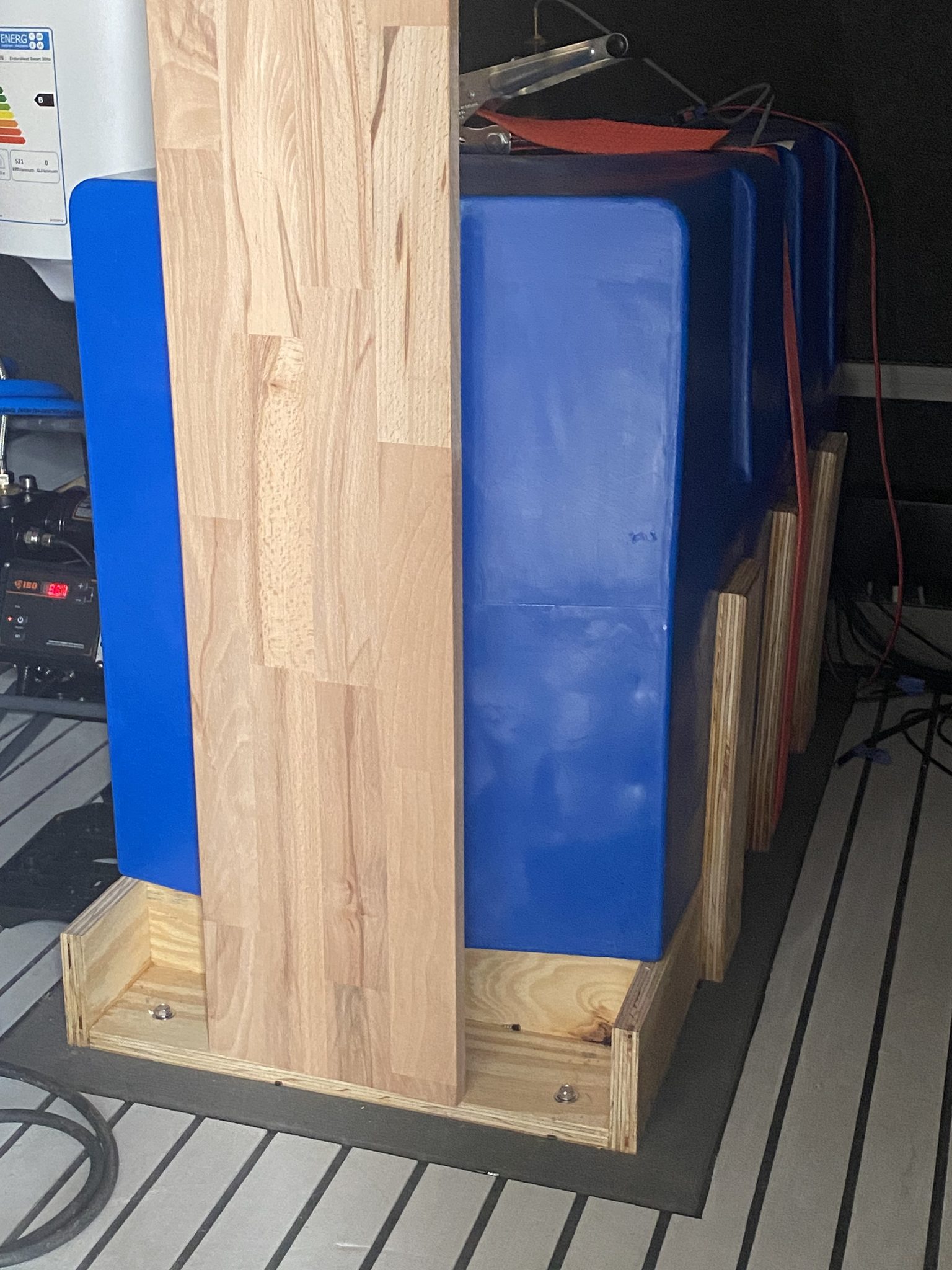
Our fresh-water tank has a gross capacity of 240 litres, of which roughly 190 to 200 litres are usable. That gives us enough reserve to stay self-sufficient for several days without constantly refilling. The tank is protected inside the utility space beneath the sleeping platform. There is room for the tank as well as its connections, pipes, pump, boiler and future maintenance.
I designed a dedicated mount for it. The tank sits in this mount and is additionally secured against jumping out by a 50 mm-wide tensioning strap. At the front, the tank sits flush against the front wall of the body. It is positively supported in the forward direction and cannot move forward under heavy braking. The mount itself is bolted to the subframe at four points. This matters with a large tank: 190 to 200 litres of water also means 190 to 200 kilograms of moving mass, so secure mounting was part of the plan from the beginning.
Waste water and frost protection
We deliberately planned two separate waste-water tanks. Each holds 120 litres, giving a total waste-water capacity of around 240 litres. They are mounted at the rear, one on each side beneath the vehicle. This uses the available space efficiently, distributes the weight more evenly and leaves more room for equipment and storage inside.
Because the tanks are outside, they are insulated and fitted with tank heaters. This gives the waste-water system better protection in low temperatures and makes it more practical in cooler weather. The waste-water volume is therefore close to the usable fresh-water capacity, keeping the system balanced for self-sufficient travel.
Hot water, pump and circulation
Hot water comes from a 30-litre Klarstein boiler. It provides enough reserve for washing up, personal washing and showers without being unnecessarily large. The boiler is also inside the accessible utility space. Water-carrying components should not be hidden where they are difficult to reach.
A domestic water pump with inverter technology supplies the system. It runs very quietly and provides even water pressure. That is a real benefit in a motorhome, where a noisy pump quickly becomes intrusive. We chose a more comfortable, smoother-running solution instead of a basic small pressure pump.
A circulation pump is also installed for the hot-water system, although its control system is still being built. The plan is an intelligent temperature-controlled setup. It will only circulate when useful, delivering hot water to the outlets sooner without consuming electricity or distributing heat continuously.
Utility space and accessibility
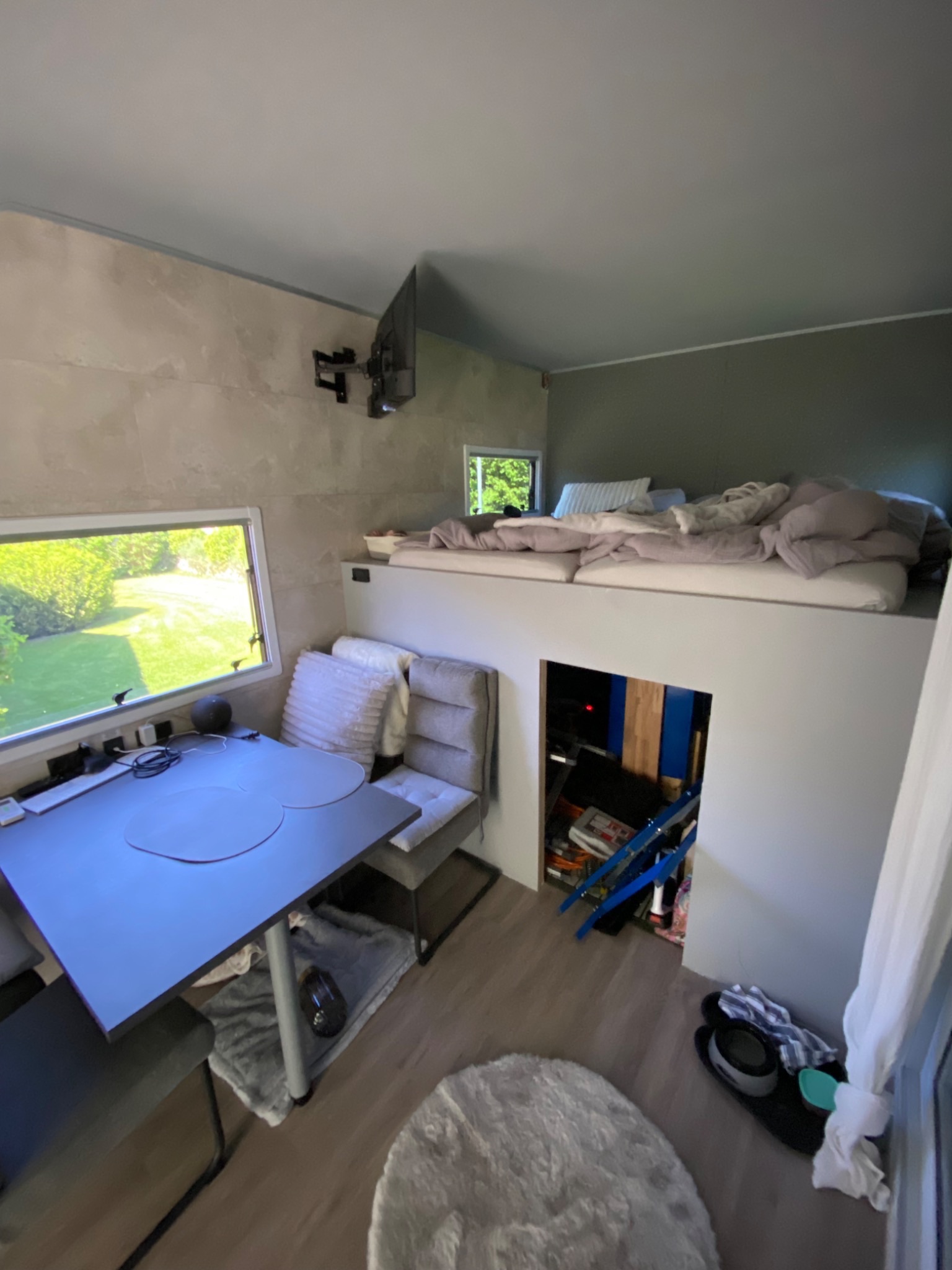
Almost 5 m² is available beneath the sleeping area, with headroom of around 1.2 metres. This makes it a genuinely usable utility space rather than a cramped installation compartment. The tanks, boiler, pump, pipes and electrical components remain accessible. The fresh-water tank is protected inside, while the two insulated and heated waste-water tanks are mounted outside at the rear, one on each side beneath the vehicle.
This was intentional because maintenance, checks and later upgrades quickly become difficult when camper equipment is hard to reach.
Why no water filter?
We deliberately decided against water filters inside the vehicle. Alongside perceived reassurance, every additional filter adds maintenance, possible microbial growth, pressure loss and more parts that need checking. Our approach therefore focuses on:
- clean filling
- suitable hoses and pipes
- sufficiently large tanks
- good accessibility
- regular system checks
- as little unnecessary extra equipment as possible
Components used
Conclusion
The motorhome's water system is deliberately robust and simple. Large fresh- and waste-water capacities, a 30-litre boiler, a quiet inverter pump and planned temperature-controlled hot-water circulation form its basis.
The large utility space beneath the bed makes installation and later work much easier. The fresh-water tank is positively supported in the forward direction and additionally secured against jumping out. The two insulated waste-water tanks sit outside at the rear and are fitted with tank heaters.
The result is not a hidden, hard-to-reach system, but a clear technical solution designed for self-sufficient travel.